|
 Guide to Start Hsin Shu
|
Chinese Calligraphy in Hsin Shu (Walking Style) 行書
Updated: 03/10/2013
Hsin Style is a style in between Tsao and Kai Styles. It was established by Liu De-Sheng ( 劉 德 昇 ) in the Han Dynasty. He depressed the wave in Zhang Tsao ( 章 草 ), simplified and reduced the wave ( 雁 尾 ) in Han Li ( 漢 隸 ). Thus Hsin Style could be written faster than Li and Kai Styles.
.jpg)
.jpg)
Zhang Tsao Li Style in Han Dynasty
Hsin Style can also be freely expressed without a fixed boundary. If it’s close to Tsao Style, it’s called Hsin Tsao Shu ( 行 草 書 ). If it’s closed to Kai Style, it’s called Hsin Kai Shu ( 行 楷 書 ). For example, many of Zhong Yao’s works were in between Hsin and Kai Styles mixed with a few Tsao Style characters.
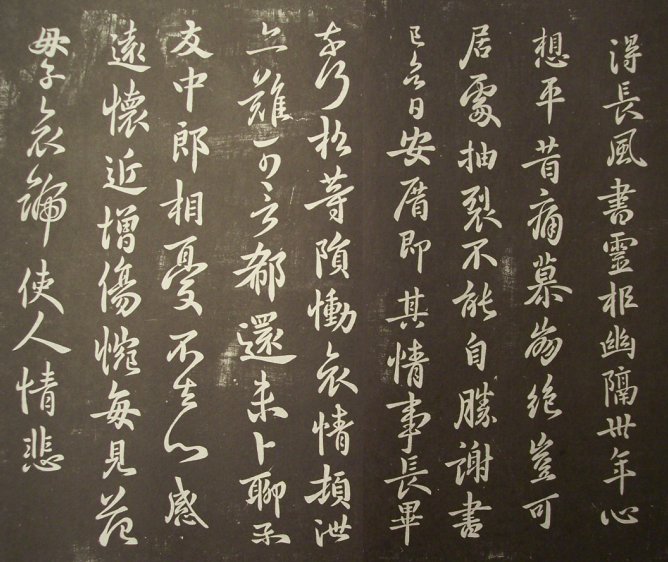
Zhong
Yao’s work in Hsin Kai Shu
The
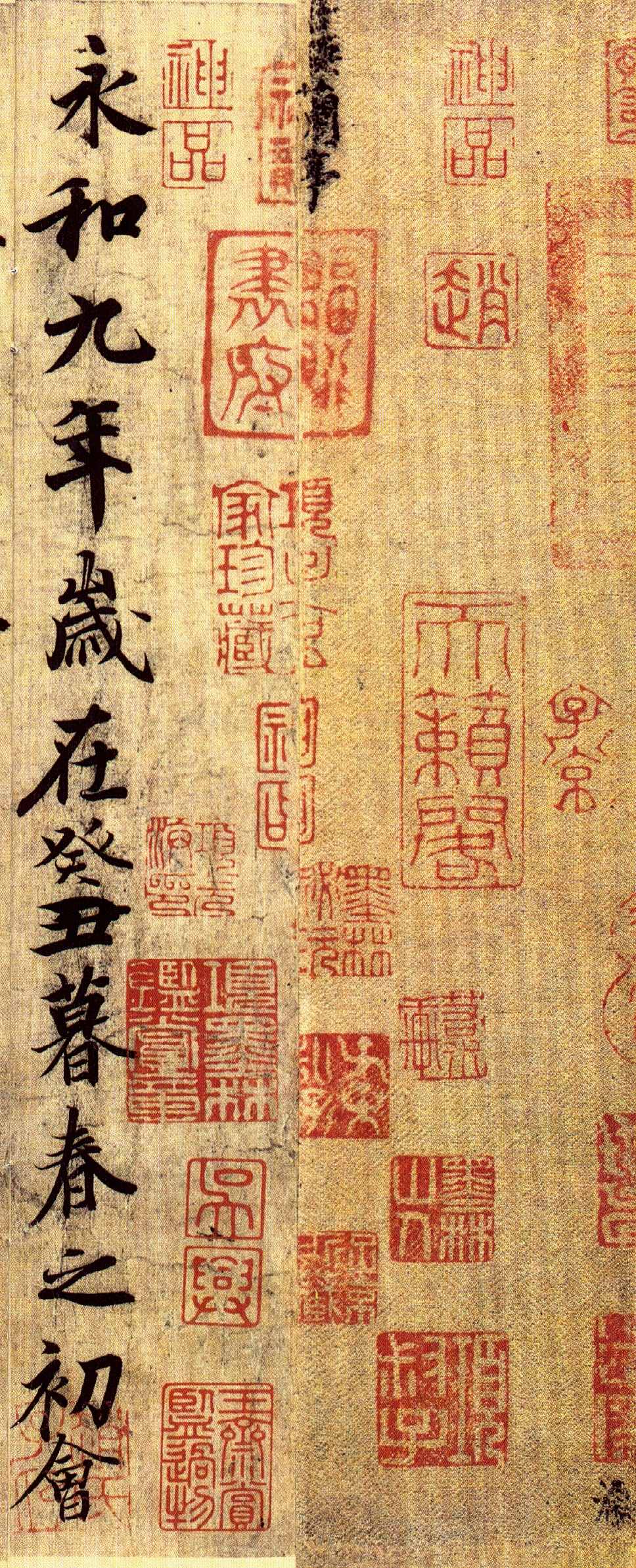
most famous calligraphy work in Hsin Shu is Wang Hsi-Chih’s Lan Ting
Prologue ( The Preface to the Orchid
Pavilion Collection, 蘭
亭
集
序
) written
in 353 A.D.
Emperor Tang Tai Zong ( 唐
太
宗
) was deeply obsessed by this work and it was buried with him at Zhao
Ling. Many duplicate copies of this work thus became one of the most important examples to
study Wang Hsi-Chih’s calligraphy for centuries. Because of Tang Tai Zong’s
favor of Wang Hsi-Chih’s calligraphy, Chinese calligraphy was deeply
influenced by Wang Hsi-Chih and his son Wang Hsian-Chih since the Tang Dynasty.
Due to the modern technology of duplicating and printing, many of Wang Hsi-Chih’s works are conveniently displayed for public appreciation in museums or for private collection at affordable prices. One of his most famous works is displayed in the National Museum of Palace in Taipei, Taiwan.
.JPG)
A
calligraphy work in Hsin Style will look more smooth, connecting and faster than
Kai Style, but less than Tsao Style. This is why Hsin Shu is known as Walking
Style and Tsao Shu as Running Style. Hsin Shu usually simplifies the strokes and
changes the sequences of strokes from Kai Shu writing. Sometimes a Shin Shu
calligrapher will mix some Tsao Shu or Kai Shu with Hsin Shu.
The following two works of the Buddhist “Heart Scripture 心 經 ” were done in Kai Shu and Hsin Shu:
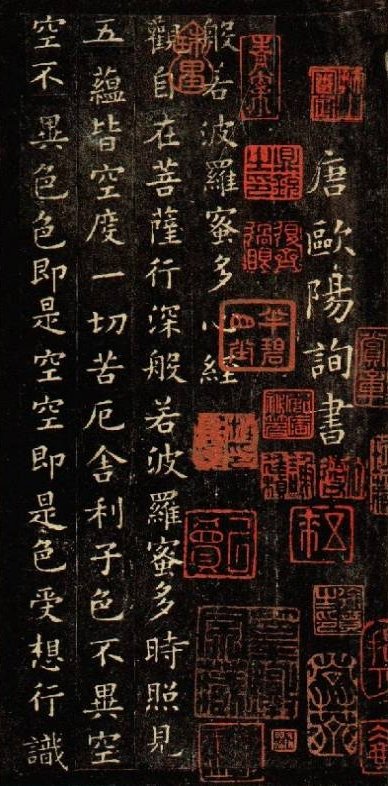
Kai Shu by Oh-Yang Shuen |

Compilation of Wang Hsi-Chih's Hsin Shu |
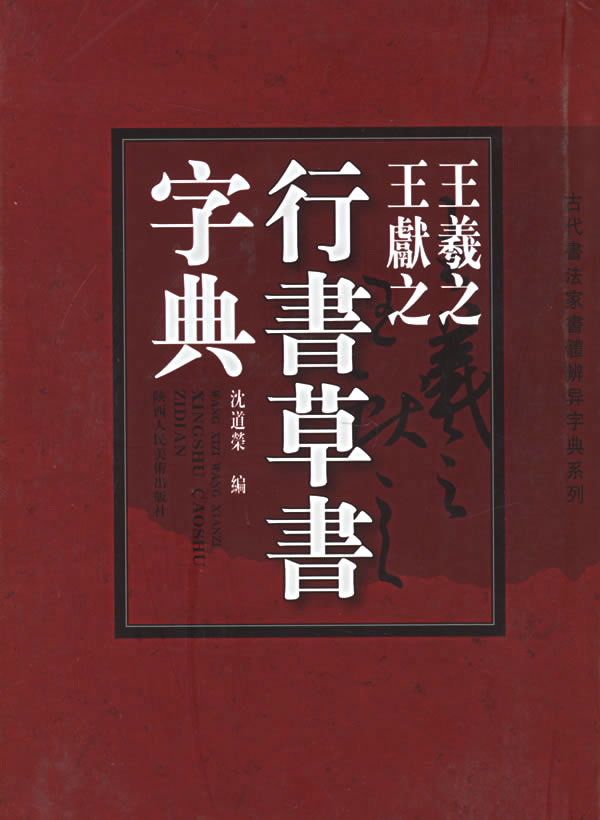
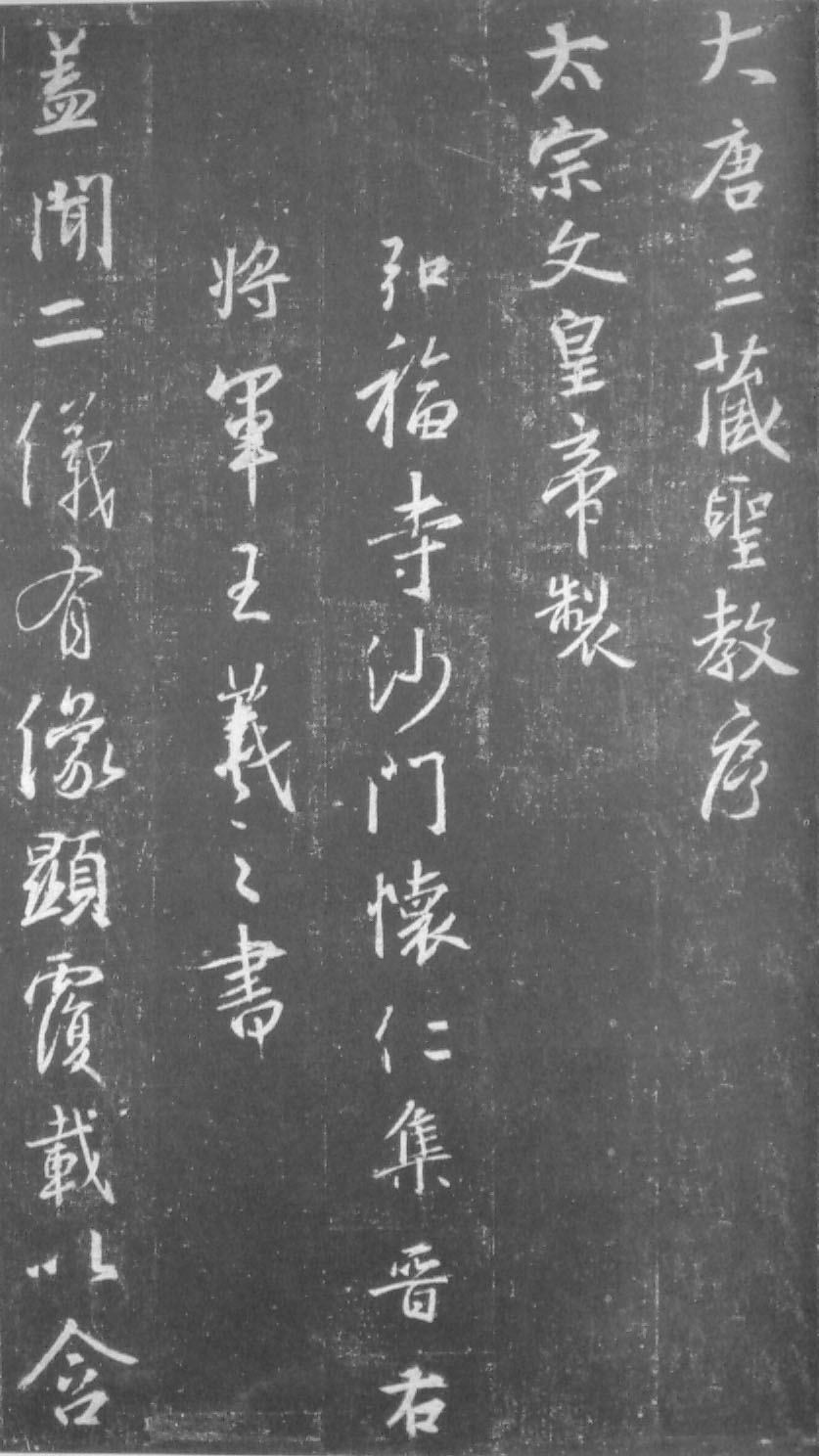
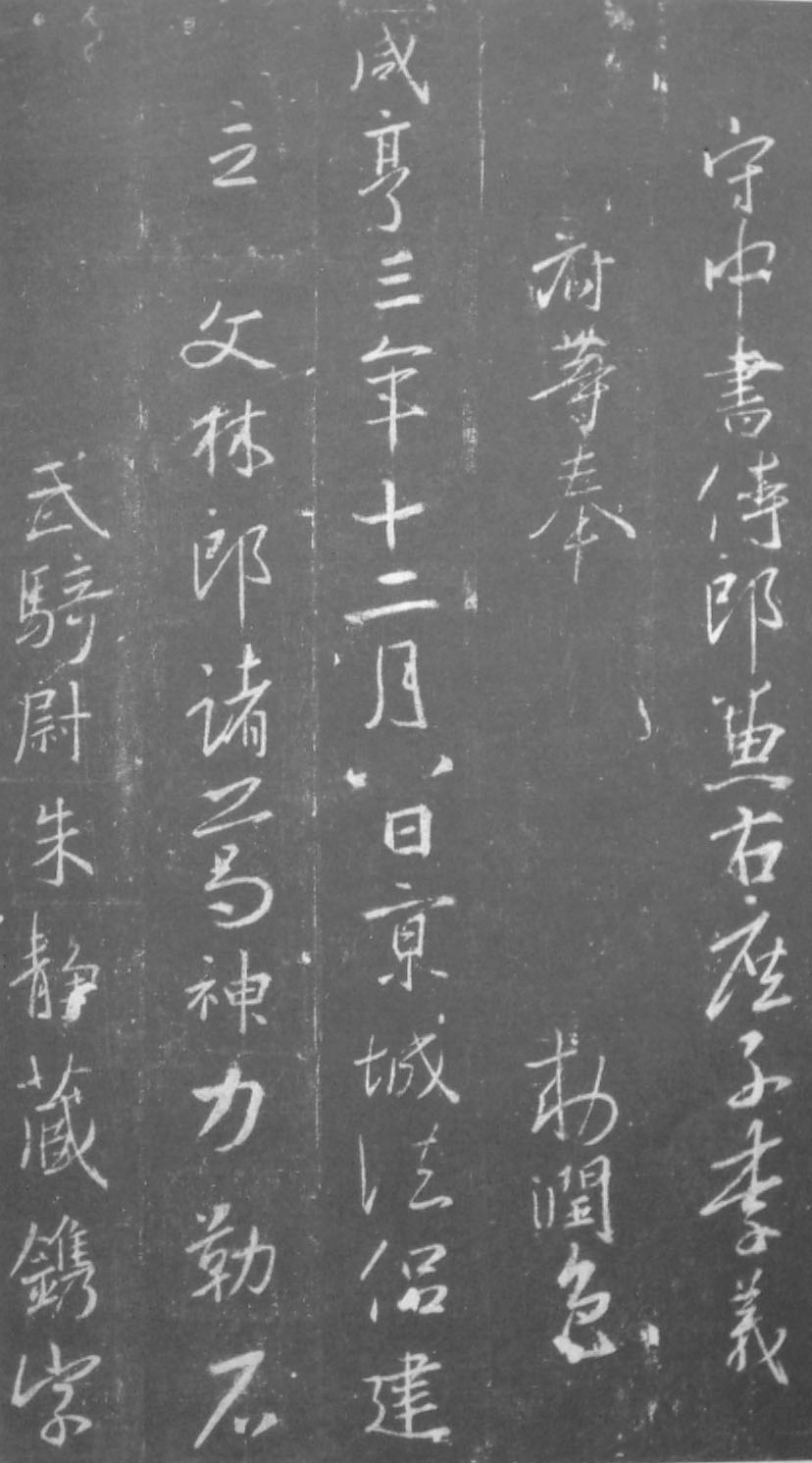
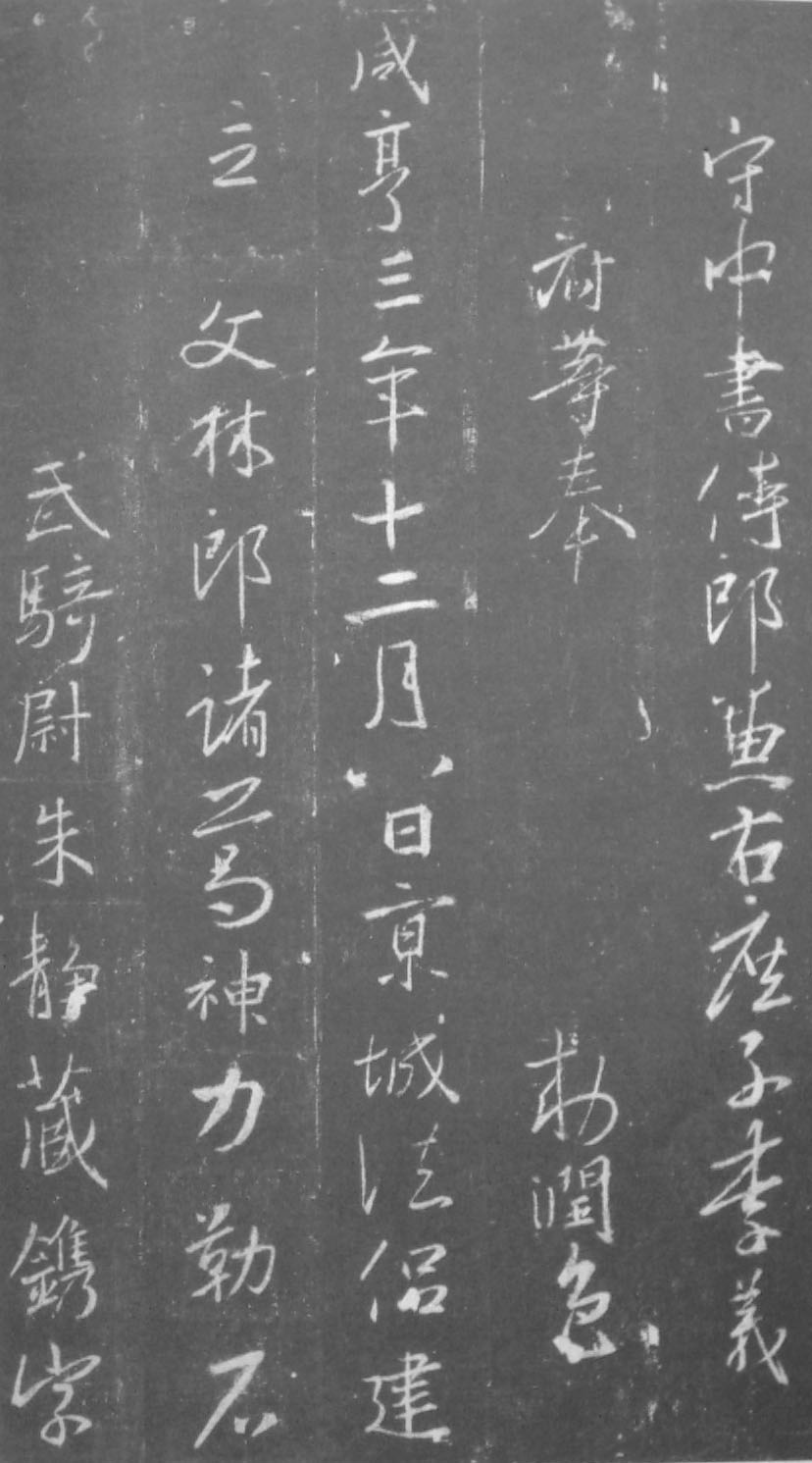
The compilation of Wang Hsi-Chih’s Hsin Shu characters into 大唐太宗文皇帝製三藏聖教序 by monk Huai Ren in the Tang Dynasty has been an excellent and popular source for beginners to understand how each character is written in Hsin Shu. The compilation was done by cutting and pasting Wang’s characters into an article "San-tsang Sheng Jiao Hsu ( 三藏聖教序 )" written by Tang Tai Zhong in a preface concerning Hsuan-tsang's 玄奘 (ca. 596-664) translations of Buddhist sutras from the Tripitaka. Since this model book is a compilation and Wang Hsi-Chih did not write this work, inevitably there are some artistic inconsistencies. Wang’s Lan Ting Prologue and many calligraphers’ Hsin Shu works are also suitable for beginners.
Free Download: 王羲之聖教序 Wang Hsi-Chih's Preface to Sacred Teaching .JPG)
Complete Download of Preface to Sacred Teaching from www.art-virtue.com/styles/hsin/PrefaceSacredTeaching/140_259_2.jpg to www.art-virtue.com/styles/hsin/PrefaceSacredTeaching/140_259_37.jpg from www.art-virtue.com/styles/hsin/PrefaceSacredTeaching/HeartSutra-1.jpg to www.art-virtue.com/styles/hsin/PrefaceSacredTeaching/HeartSutra-8.jpg |
Only after the student has learned Kai Shu
well enough may she or he proceed to Hsin Shu. A
baby first learns to crawl and sit, then to walk and run. The stages cannot be reversed
as in Chinese calligraphy – first Kai Style, then Hsin and Tsao Styles.
If the student still has difficulty in doing the smooth or faster strokes in Hsin Shu, s/he needs to go back to practice Kai Shu more. A solid foundation leads to success in all arts while a radical progress may result in disappointment or failure.
Liu
De-Sheng (c. 146-189)
劉
德
昇
He
was famous for the establishment (not creation) of Hsin Shu. He taught Zhong Yao
and Hu Zhao.
Zhong
Yao (151-230)
鍾
繇
He studied calligraphy from Liu De-Sheng. People viewed his calligraphy as “swan traveling in the sky, wild goose playing in the sea". He was peered with Zhang Chih and referred to as “Zhong Zhang 鍾 張 ”. He was also peered with Wang Hsi-Chih and referred to as “Zhong Wang 鍾 王 ”. Emperor Liang Wu Di said there were twelve sets of mind levels with extraordinary wonders within his work.
Wang
Hsi-Chih (303-361)
王
羲
之
He
earned
the titles of "The Calligrapher-Sage
書
聖"
&
"The Dragon of Hsin Shu 行
書
之
龍.
_Large.jpg)
快雪時晴帖 (Click for Complete Large Pictures)

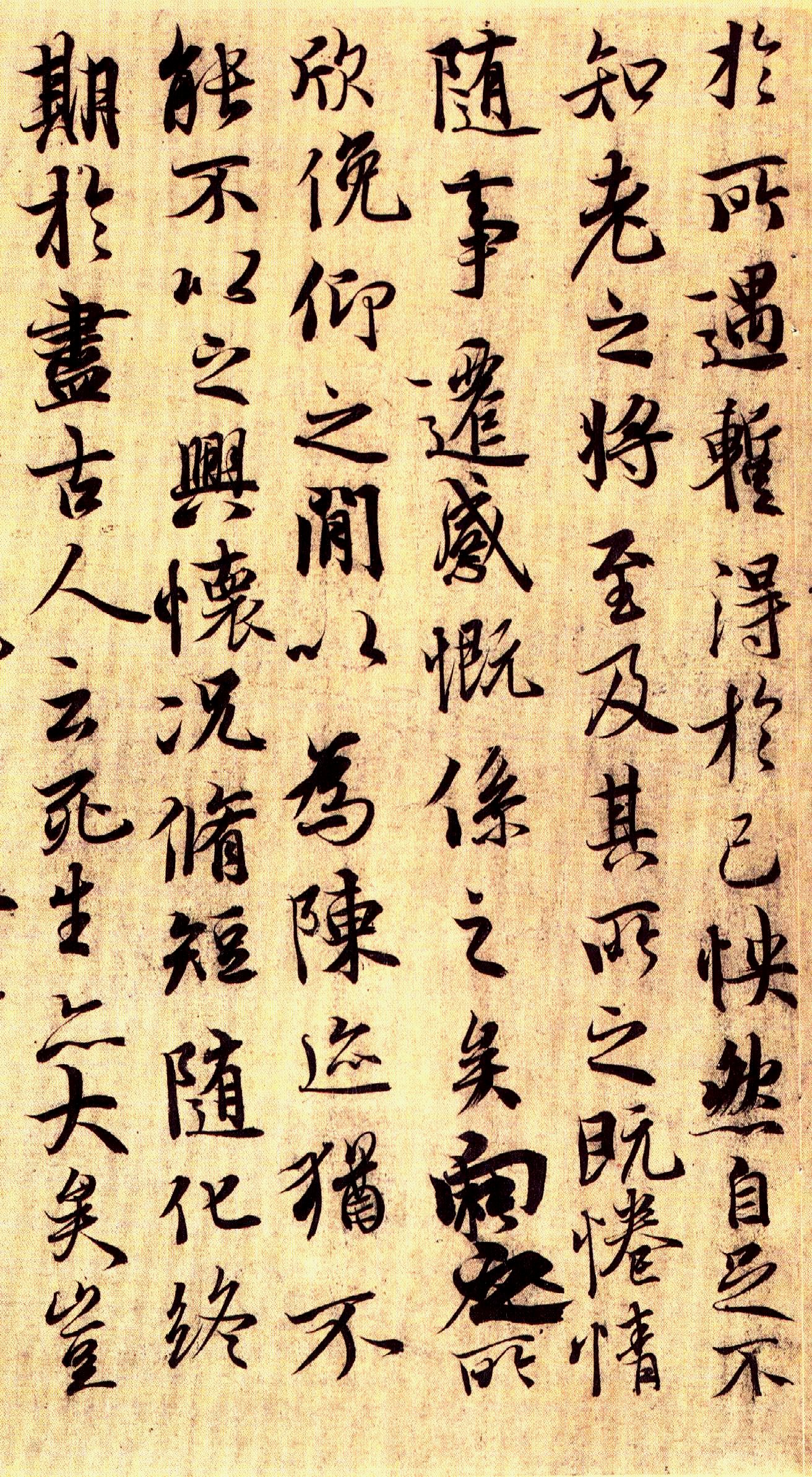

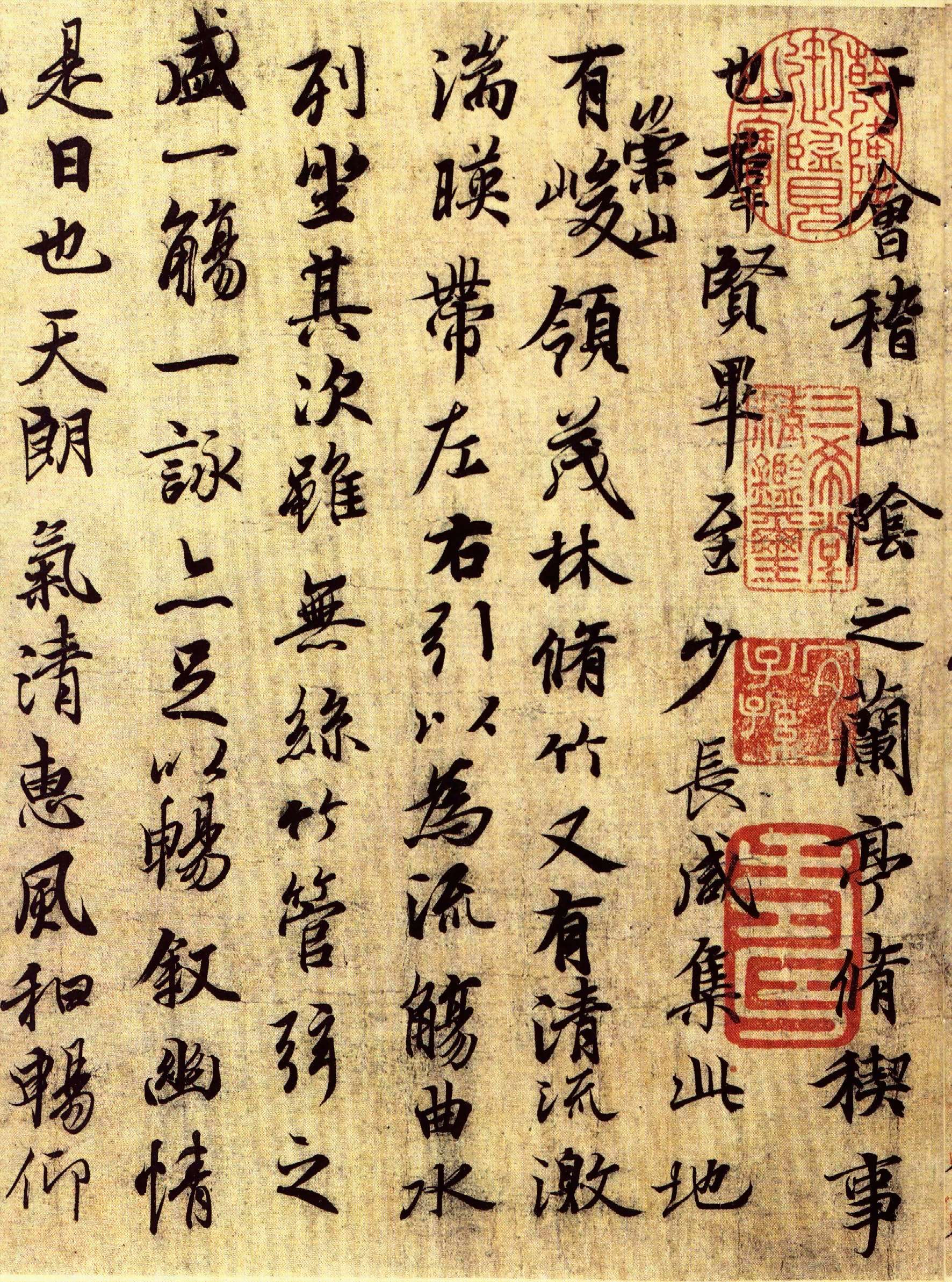
Lan Ting Prologue 蘭 亭 集 序
|
March 3rd in the ninth year (353 A.D.) of Yong He (an emperor of the Jin Dynasty), Wang Hsi-Chih, Hsieh An and others met at Shan Yin (Shao Xing) Lan Ting. This was a poem meeting (similar to academic conference today). All people would write a peom there and they would make a collection of poems. Wang Hsi-Chih wrote the preface for the poems collection. It's named Lan Ting Prologue. Lan Ting Prologue is highly valued by all calligraphers later. Tang Tai Zong (an emperor of Tang Dynasty) loved it very much. He ordered calligraphers to copy it and give to his officers. As his will, the original Lan Ting Prologue was buried with him. Since then, the only copies existing are the copies of the Tang Dynasty. |
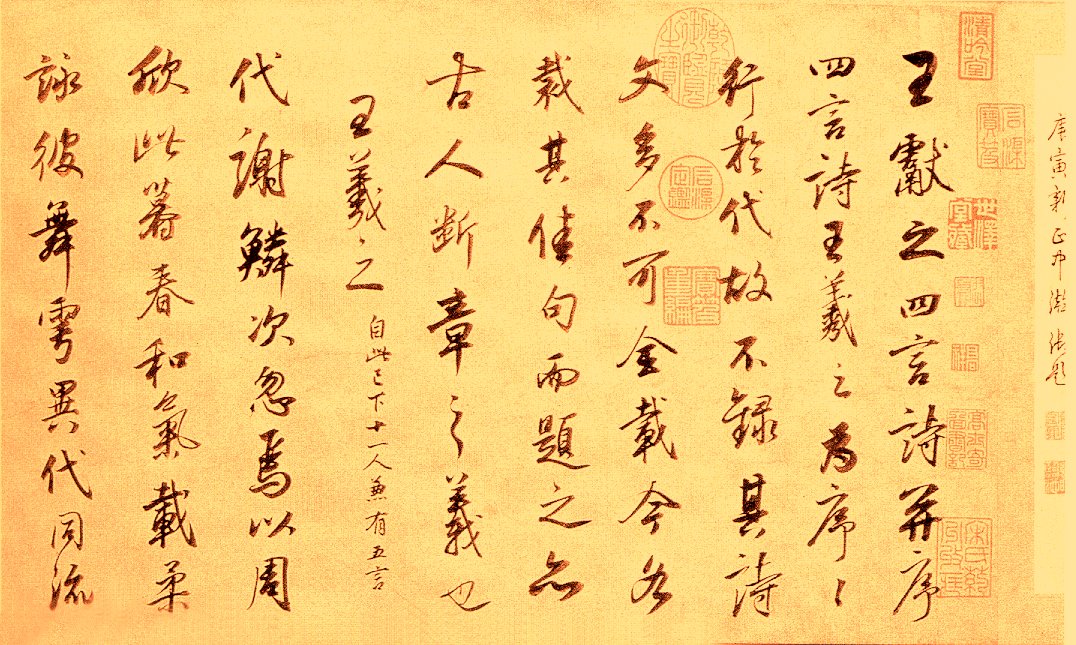
Wang
Hsian-Chih (344-386)
王
獻
之
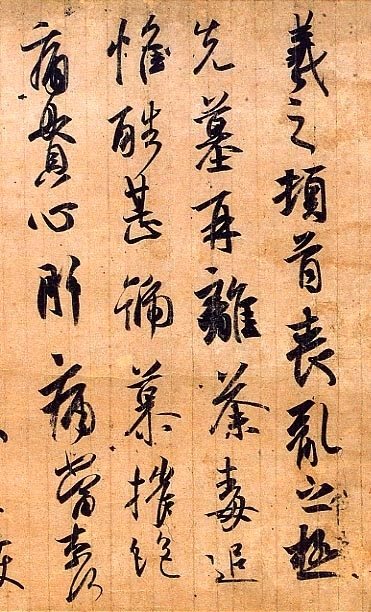
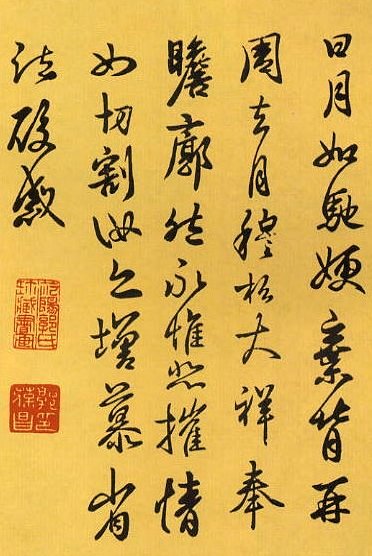
The 7th son of Wang Hsi-Chih. He studied his father's calligraphy earlier and studied Zhang Chih's calligraphy later, then he reformed bravely from his father's styles. His style was brilliant and heroic.
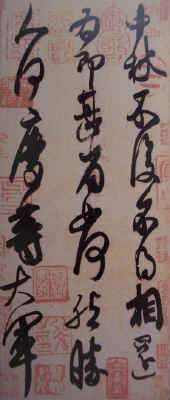
Mixed Walking & Running Scripts
Yen
Jen-Ching (709-785)
顏
真
卿
He
studied Chu Sui-Liang's ( 褚
遂
良
) calligraphy earlier. Later, he became a student of Zhang Shui (
張
旭
). He abandoned the existing rules of the earlier Tang Dynasty and
created a brand new style of Kai Shu. His calligraphy theory and foundation were
based on his teacher Zhang Shui’s teaching.
In the Tang Dynasty, both Hsu Hao ( 徐 浩 ) and Yen Jen-Ching inherited Wang Hsi-Chih’s calligraphy. Critics said Hsu Hao got his “skin and hair” in appearance so his work looked like Wang’s; however, Yen Jen-Ching inherited Wang’s internal substance so his work did not look like Wang’s. His Hsin Shu is highly regarded after Wang Hsi-Chih’s.
Yen was also a high official in the army and a stateman. When viewing his work, one can feel the artist pouring the energy of his whole body, mind, and spirit into his writing, which is full of "virile beauty" and indications of his strong character and high moral standard.
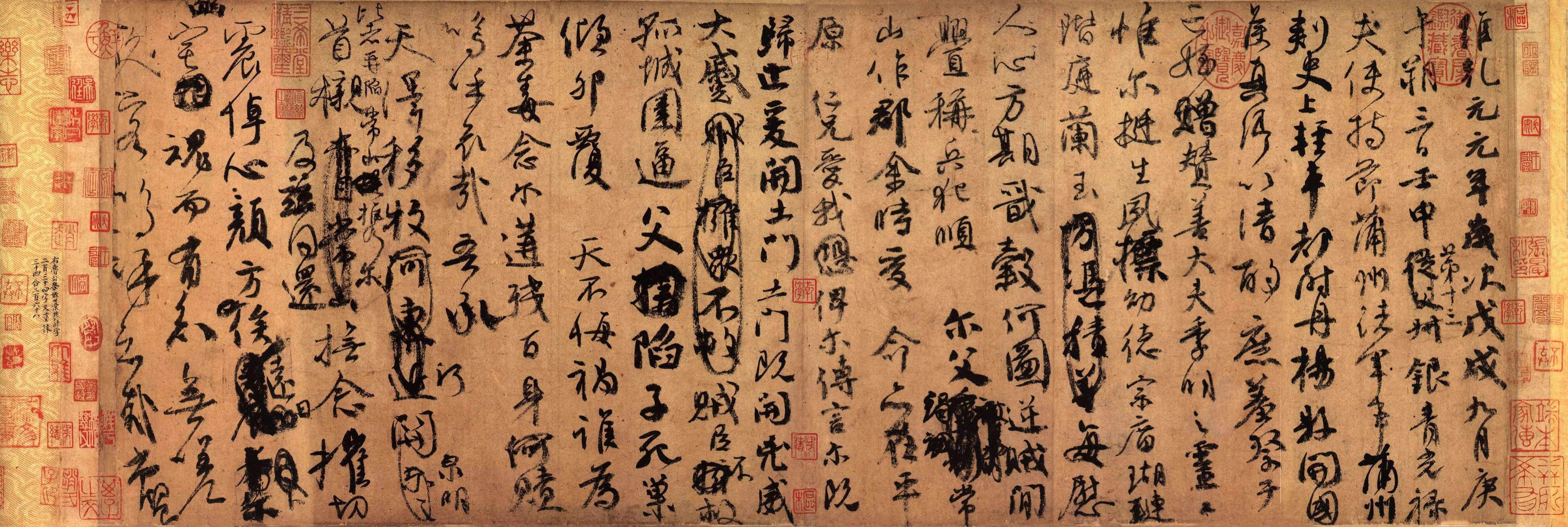
Lamentation for Nephew 祭侄文稿
Tsai
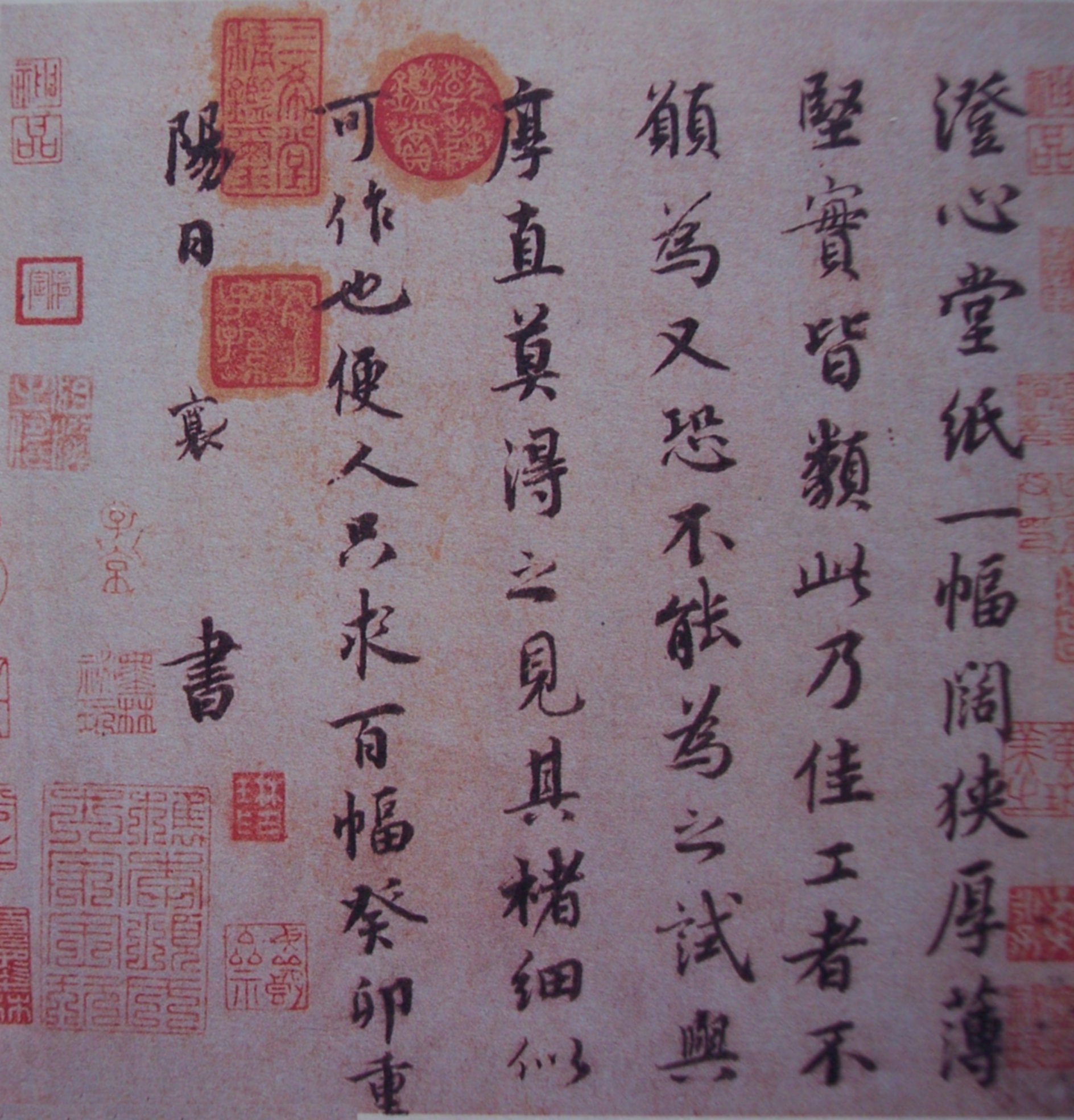
Hsiang (1012-1067)
蔡
襄
His achievement in Hsin Style was considered higher than in Kai Style.
Mi
Fu (1051-1107)
米
芾
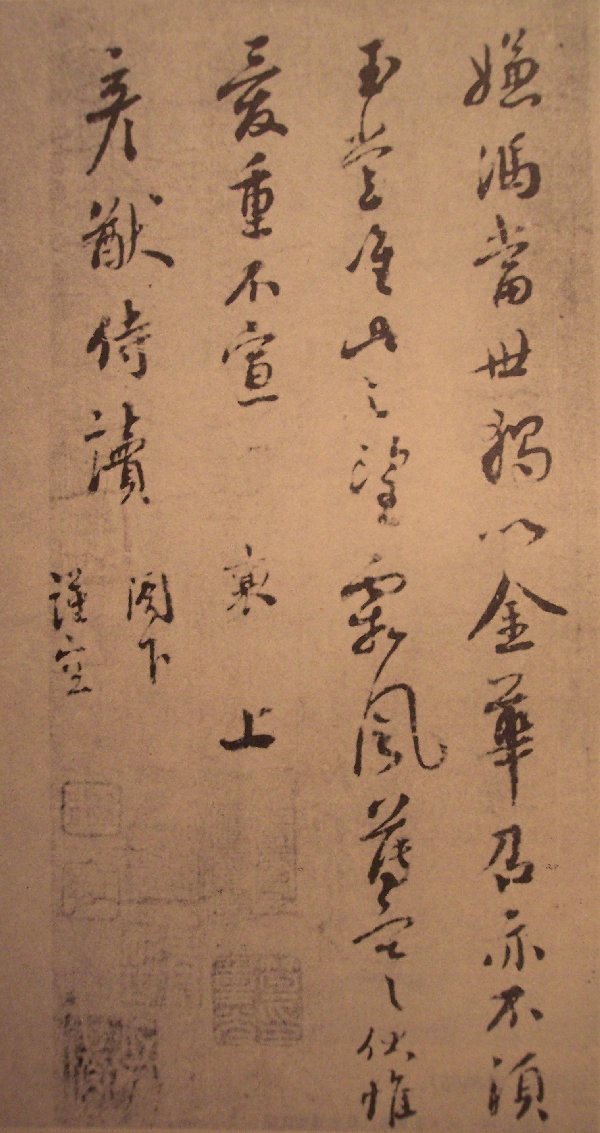
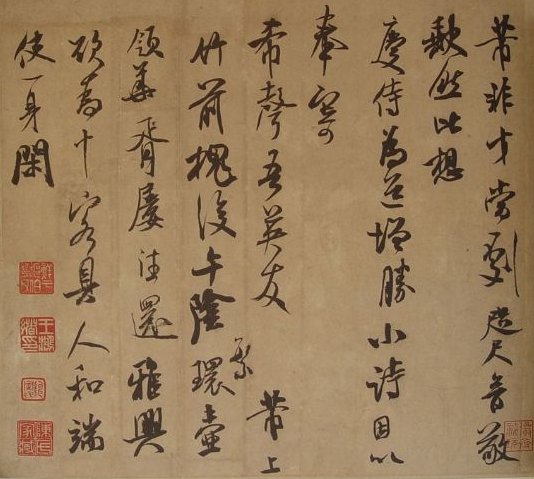
He was widely considered the best calligrapher in the Sung Dynasty. Famous for his lifting arm ( 懸 肘 ) skill while holding a brush to generate unique flowing and connecting effects in his Hsin and Tsao Styles. He was very good at emulating ancient masterpieces – he could duplicate the Two Wang’s works so well that the viewers could not tell the difference.
.jpg)

|
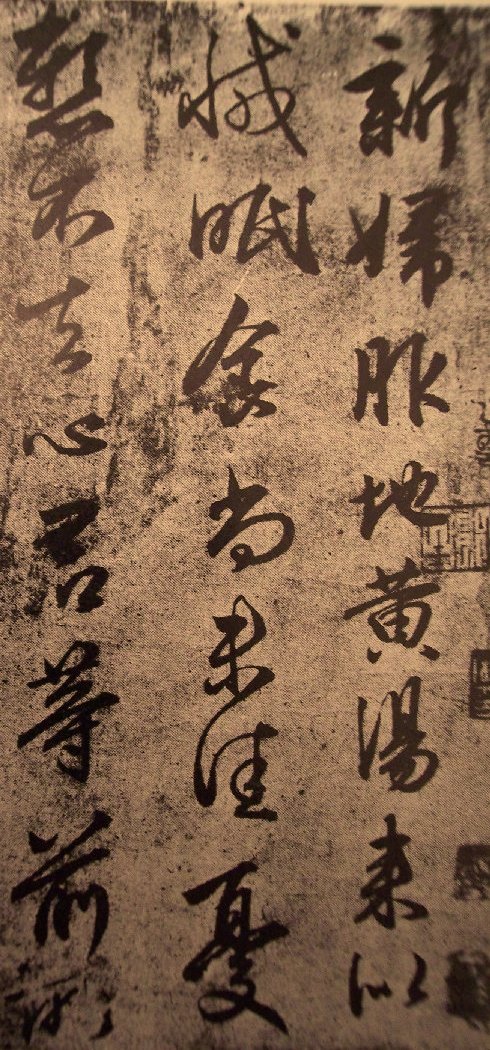
《宋史文苑傳》說:“芾特妙于翰墨,沈著飛,得王獻之筆意。”《宣和書譜》 說他:“大抵書效羲之,詩追李白,篆宗史籀,隸法師宜官;自謂‘善書者只有一 筆,我獨有四面’,識者然之。方芾書時,其寸紙數字人爭售之,以為珍玩。” 他在繼承“二王”書法傳統上下過苦功,能夠登堂入室。真、草、隸、篆、行都能 寫,而尤以行草書見長。他自稱“刷字”,是指他用筆迅疾而勁健,盡興盡勢盡力, 追求“刷”的韻味、氣魄、力量,追求自然。他的書法作品,大至詩帖,小至尺牘、 題跋都具有痛快淋漓,欹縱變幻,雄健清新的特點,快刀利劍的氣勢。
|
Sung
Gao Zong (1107-1187)
宋
高
宗
When he was the Emperor, he practiced calligraphy every day for fifty years. He gave up learning Huang Ting-Jian’s and Mi Fu’s calligraphy and focused mainly on the Two Wangs. He emulated Wang Hsi-Chih’s Hsin Shu pretty well.
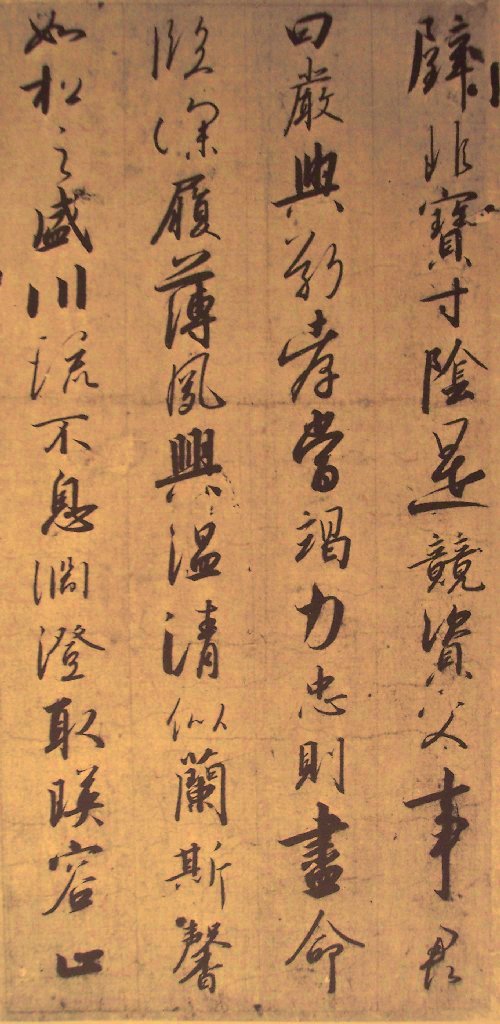
Xien-Yu
Su (1257-1302)
鮮
于
樞
He studied Zhang Tien-Si’s work first, then Jin & Tang Dynasties’ calligraphy to establish his style. He inherited the Two Wangs’ spirit. He and Zhao Meng-Fu deeply admired each other.
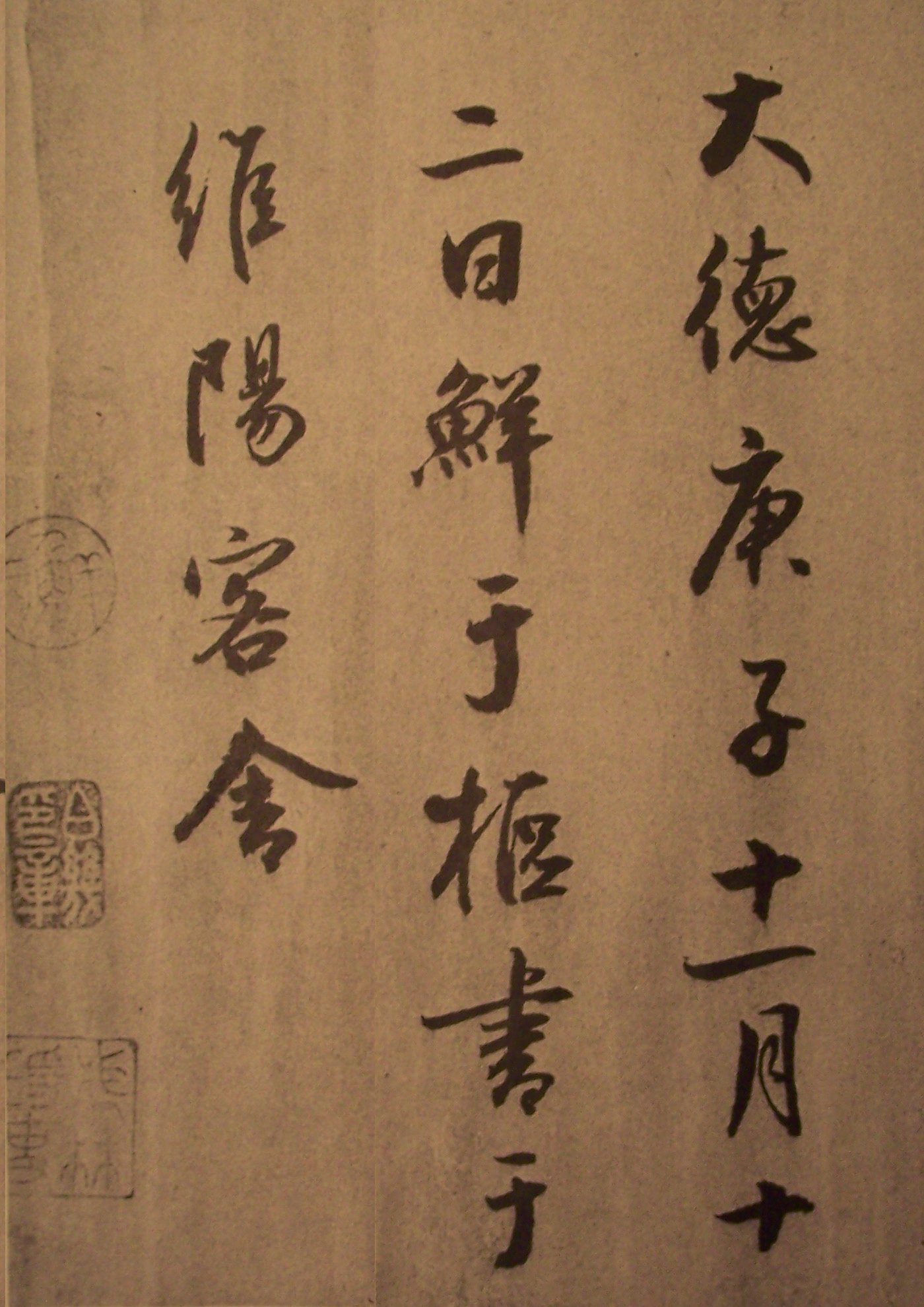
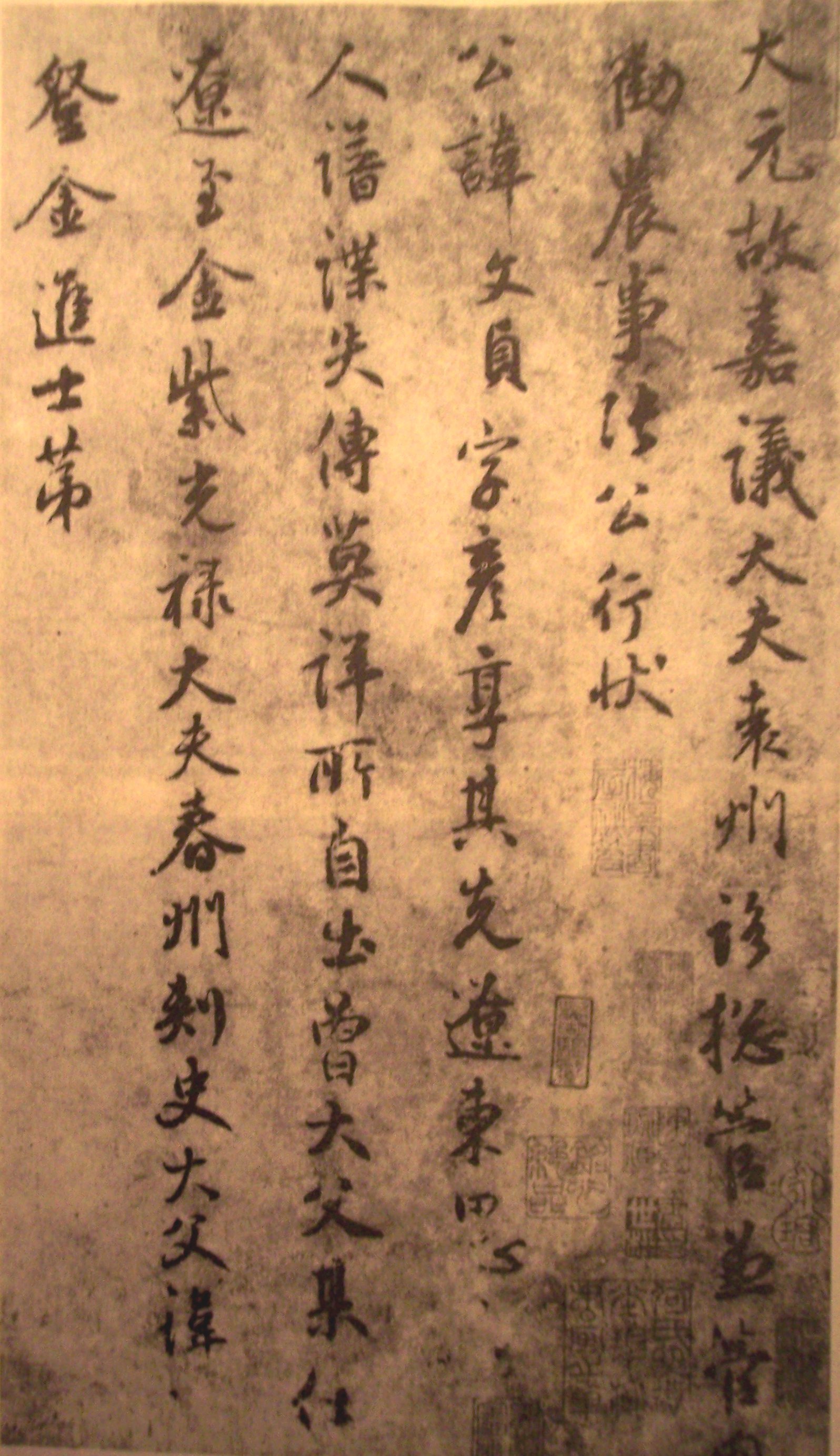
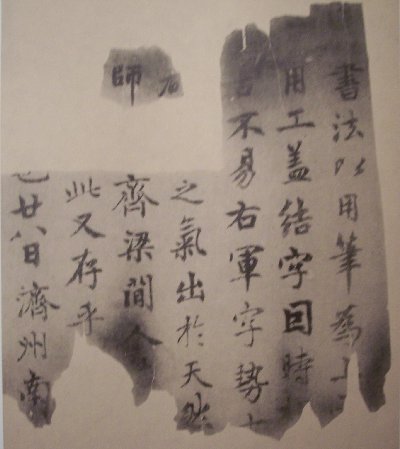
Zhao
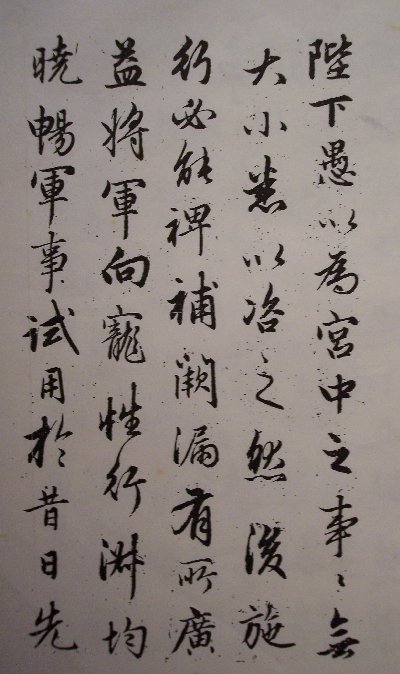
Meng-Fu (1254-1322)
趙
孟
頫
He was good at various styles. He was a descendant of Sung Dynasty royal family. He and Xien-Yu Su deeply respected and admired each other's achievement.

.jpg)
.jpg)
Dong
Chi-Tsun (1555-1636)
董
其
昌
He studied works by Yen Jen-Ching, Yu Shu-Nan, Huang Ting-Jian. He despised Wen Zheng-Ming and Zhu Yuen-Ming. He was also a famous painter. He was the favored Chinese calligrapher by the emperors in the Ming Dynasty.
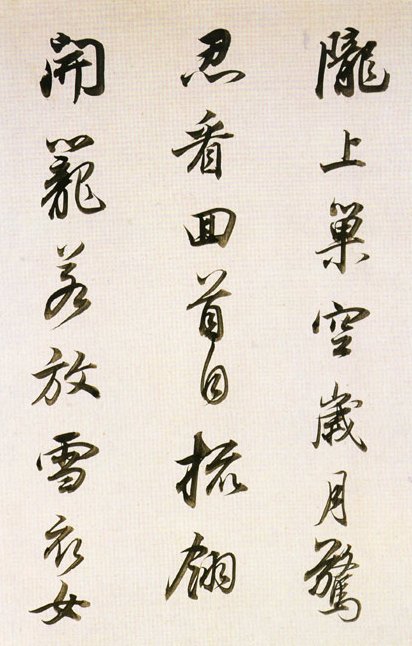
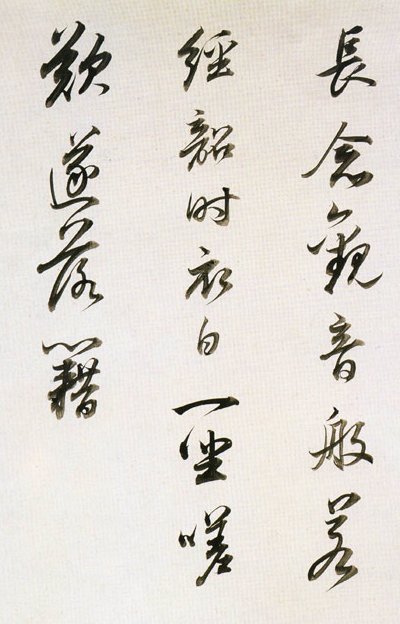
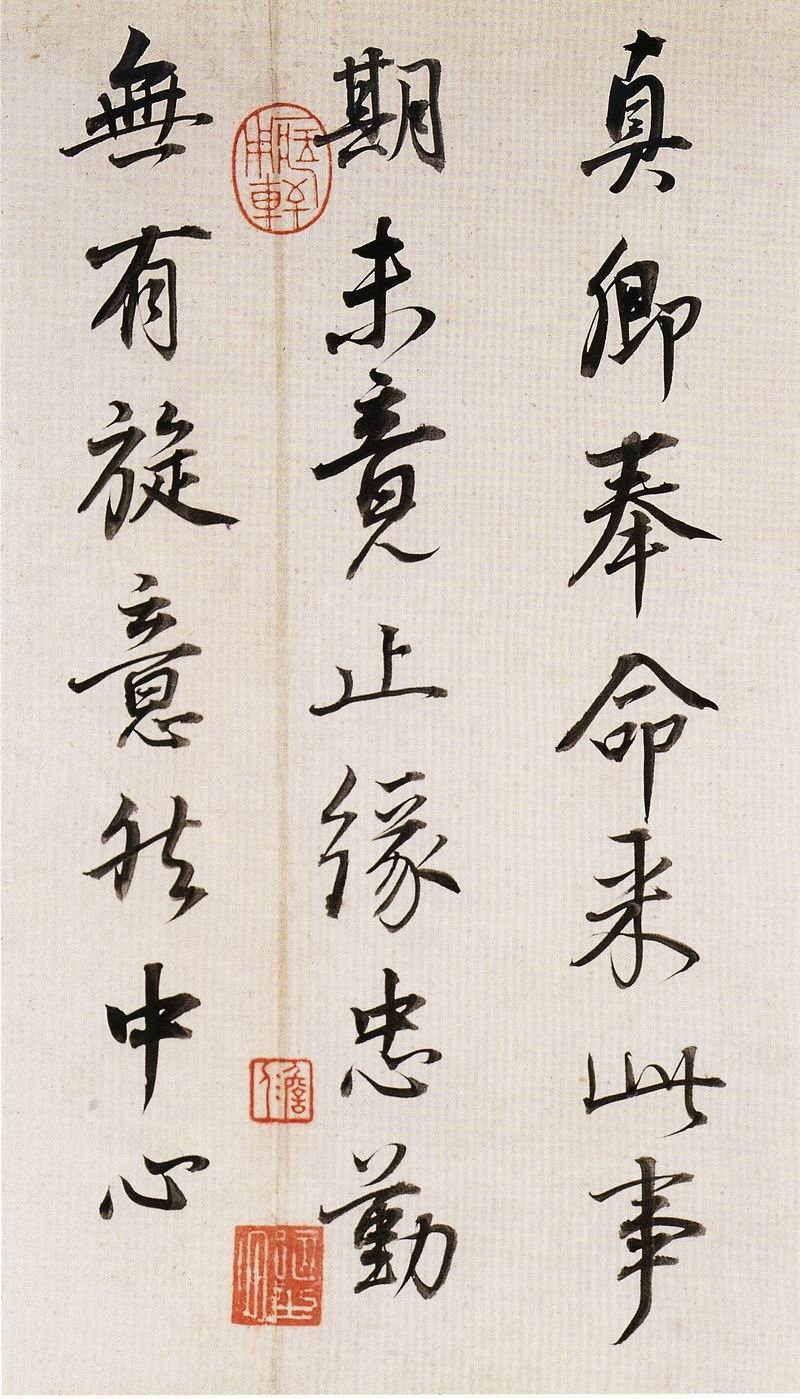
Good at literature, poetry, calligraphy and painting. His Kai Shu was considered number one in the last 500 years of history by many scholars. Member of late Ching royal family.
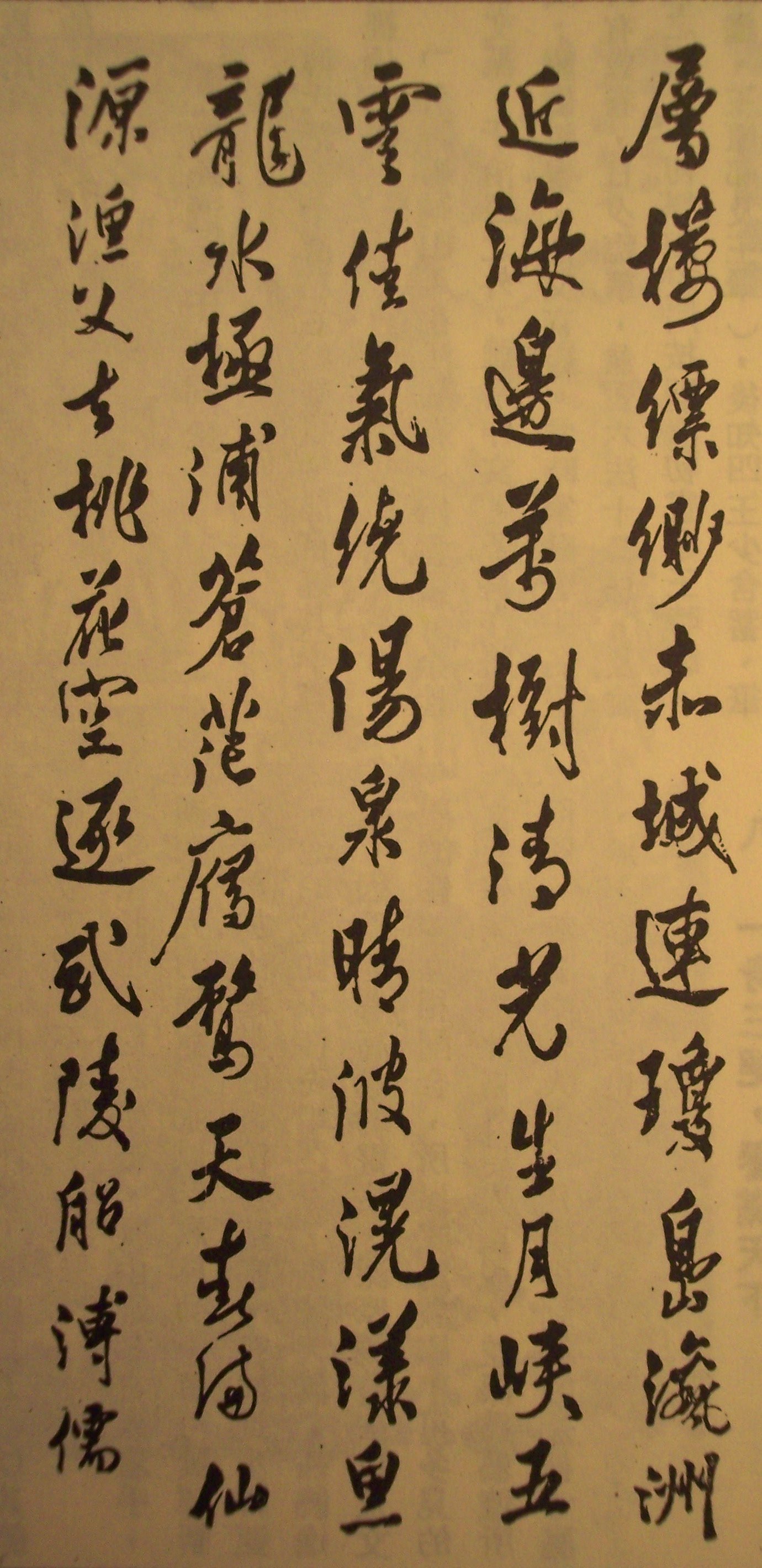

|
在行草書中行氣平衡有時不可以單字論平衡,必須以起筆到收筆中每字論總平衡。 每一字的重心,隨著運筆動線流動,每一行運筆動線又繞著中心線走,因此字或偏左,或偏右。 |
行氣 Flow of Qi in a line or between the lines (行氣 Pinyin: Hang Qi)
行氣 is the connecting effects between several characters in a line ( 行 ) or several lines. When Chinese say a good calligraphy work has good 行 氣, we may also refer to the spiritual consonance of the work viewed as a whole.
Qi
( 氣
)
refers to the consistent and uninterrupted energy flow. A work with good 行
氣
appears to consist of strokes being joined to the next ones by visible and
invisible ligaments or 游絲
and artistic arrangements of
spacing between the strokes, characters, and lines with expressions and rhythms.
When a Chinese calligraphy work of any style lacks of
行
氣, it
will look choppy. The elements of 行
氣
may include consistent, artistic, and continuous flow of energy and beauty. They
are especially important for Hsin and Tsao Styles.
行 氣 is not only important in practicing Hsin and Tsao Styles; it’s important for all five major styles. Good 行 氣 depends on training, skills, mental design, confidence, and etc. It can be obtained by correct postures and be improved indefinitely. (More details in P3: Requirements of Posture and P5: Perfection Is Relative, Not Absolute)
In practicing Chinese calligraphy with good 行 氣, one cannot be interrupted during writing. Any mental or physical distraction will decrease the artistic level in terms of 行 氣. Thus it’s advisable to finish a work without a break or any interruption unless it’s extremely long (say 100 or 200 characters). It's also not advisable to start writing Chinese calligrahy characters "from left to right" as this may compromise the artistic spirit and twist 行 氣. Observing and copying (including repeatedly trying) ancient Chinese calligraphy models are good ways to cultivate good 行 氣. The Hanging Arm Technique is strongly recommended for uninterrupted connecting effects.
Example 1: Wang Xizhi's famous one stroke connecting several characters
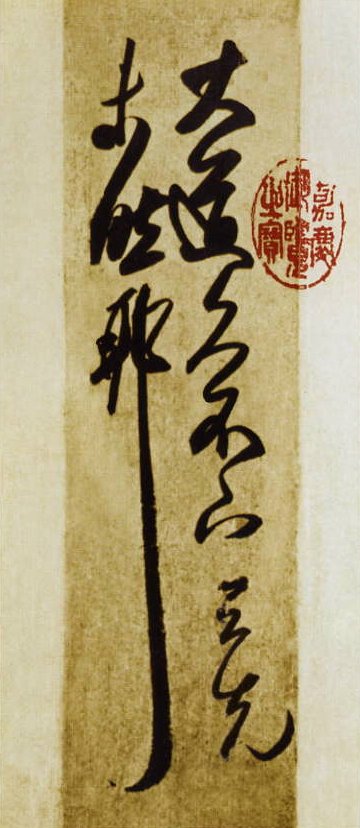
|
|
A Playlist of Semi-Cursive and Cursive Sample Characters (Details in YouTube More Info)
A good foundation in Kai Shu leads to success in Hsin Shu and Tsao Shu. Without a strong foundation in Kai Style, there is no guaranteed success to try learnining the Semi-Cursive and Cursive Styles. Chinese calligraphers often make the following analogies and assert that the stages cannot be reversed for beginners.
|
Styles |
Analogies |
Stages |
|
Kai Shu |
Sitting and standing |
1 |
|
Hsin Shu (Walking Style or Semi-Cursive Style) |
Walking |
2 |
|
Tsao Shu (Running Style or Cursive Style) |
Running |
3 |
When one has learned to write the Hanging Needle ( 懸針豎 ) in Kai Shu, one may learn Semi-Cursive and Cursive Styles more easily. If one has not learned to write Hanging Needle well enough, it's recommended that focusing more on Kai Shu will help understand the basics of calligraphy.
After getting better with Kai Shu, some calligraphers suggest to practice Kai Shu (also called 真書 / Pinyin: Zhen Shu) and Hsin Shu interchangeably (“Zhen Hsin Hsian Jian 真行相兼.”) In this way, we may strengthen our foundation in Kai Shu to make progress in Hsin Shu while raising our Kai Shu level and make it look more flowing and smooth by benefiting from practicing Hsin Shu.
真行相兼

.jpg)
.JPG)
.jpg)